
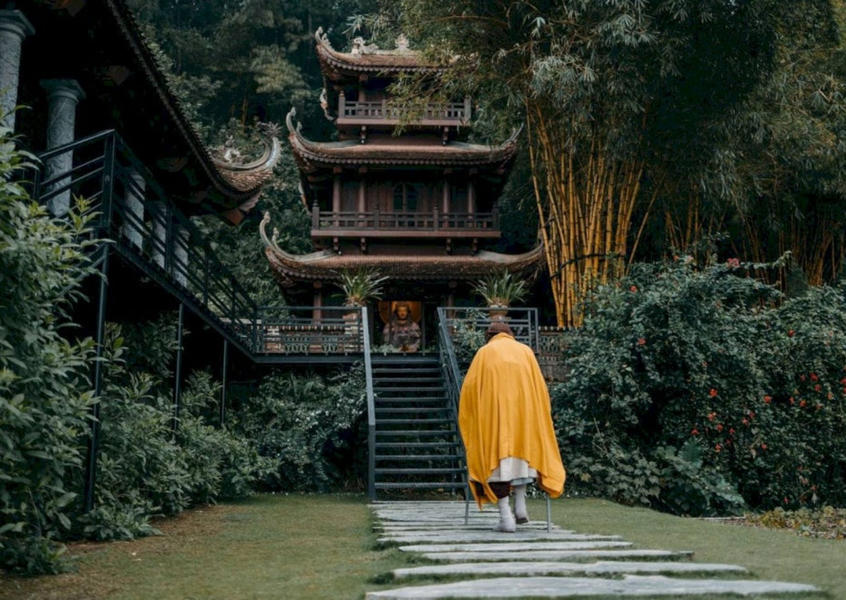
Imagine standing inside a 400-year-old pagoda as dawn mist curls across a lotus pond. The only sounds are distant temple bells and the soft footsteps of a monk leading you through the inner courtyard, a place most visitors never see.
Vietnam holds one of Asia’s richest Buddhist traditions, yet most tours reduce it to a 20-minute photo stop. This guide is for travelers who want something entirely different: a curated, private journey into the spiritual heart of the country, without sacrificing comfort for a single moment.
1. What makes a private Buddhist temple tour truly different?
The difference between a group temple tour and a private one is not simply about the size of the van.
On a group tour, you follow a fixed schedule designed for the median traveler. You arrive when the coach arrives, leave when the driver says so, and share the moment with 20 strangers. The temples are experienced as scenery. The monks are photographed from a distance. On a private tour, the experience is rebuilt around you.
- Time is yours: If a particular courtyard moves you, you stay. If the abbot is willing to speak at length about Vietnamese Zen philosophy, the guide creates space for that conversation. There is no other passenger waiting by the gate.
- Access is deeper: Private arrangements, built through years of local relationships, open doors that group tours cannot reach. A blessing ceremony conducted by the head monk. An invitation to observe the morning chanting ritual before the temple opens to the public. A walking meditation in the pine forest surrounding a hilltop monastery, led by a resident nun.
- Transportation is seamless: private Mercedes vehicles. Hotel pick-up and drop-off precisely when you want. Cold towels, mineral water, and stops for spontaneous detours. The logistics simply disappear.
According to luxury travel experts, private temple tours in Vietnam often include special access during less crowded periods, as well as meetings with monks who provide perspectives on Vietnamese spiritual traditions unavailable through standard itineraries.
2. The 4 best destinations for a private Buddhist temple tour in Vietnam
Vietnam stretches over 1,600 kilometers from north to south, and Buddhist heritage runs through nearly every corner of that geography. The four destinations below are not simply Vietnam’s most famous temple locations. They are the places where a private tour makes the most significant difference. For a complete journey, these four destinations form a natural sequence. Each can also stand alone as a focused two- to three-day spiritual itinerary.
2.1. Hue: The spiritual capital of Vietnam
No city in Vietnam comes close to Hue for Buddhist depth. With over 300 pagodas spread across the city and surrounding hills, it was for centuries the seat of both imperial power and Buddhist scholarship.
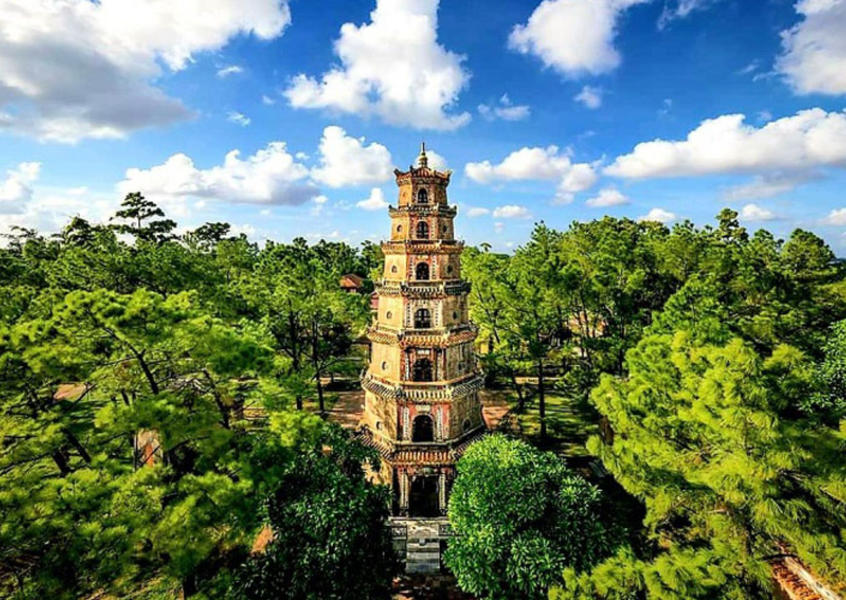
Thien Mu Pagoda
Standing on a bluff above the Perfume River, the pagoda with its seven-story Phuoc Duyen Tower has become the defining image of Hue. On a private tour, you can arrive by private wooden boat at sunrise, when the river is silent and the monks have just begun their morning prayers.
Tu Hieu Pagoda
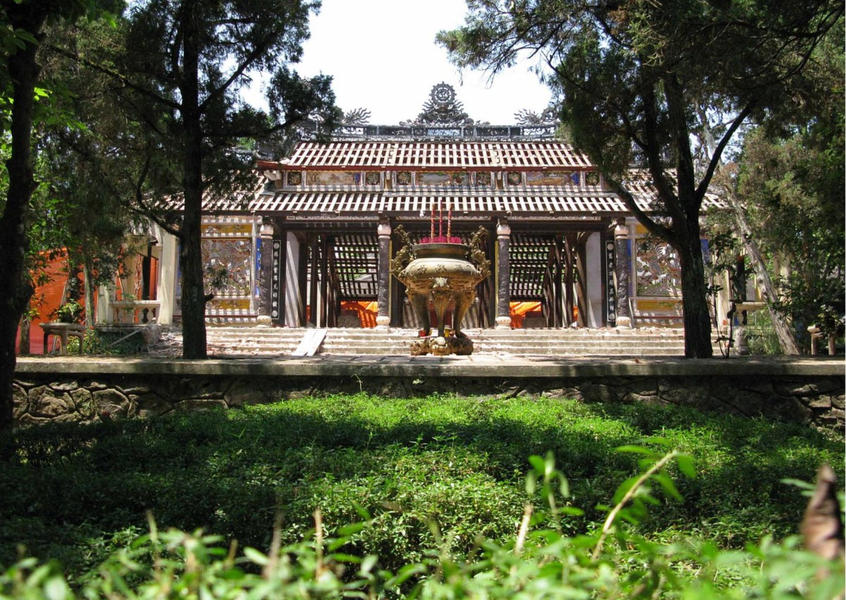
Tu Hieu Pagoda holds a particular reverence for anyone familiar with Thich Nhat Hanh’s work. This is where he was ordained as a novice monk. The garden paths, fish ponds, and meditation halls carry the quiet he wrote about extensively. Visitors who come privately can spend unhurried time in contemplative walking, guided by a local expert who understands the philosophical significance of each space.
Huyen Khong Son Thuong Monastery
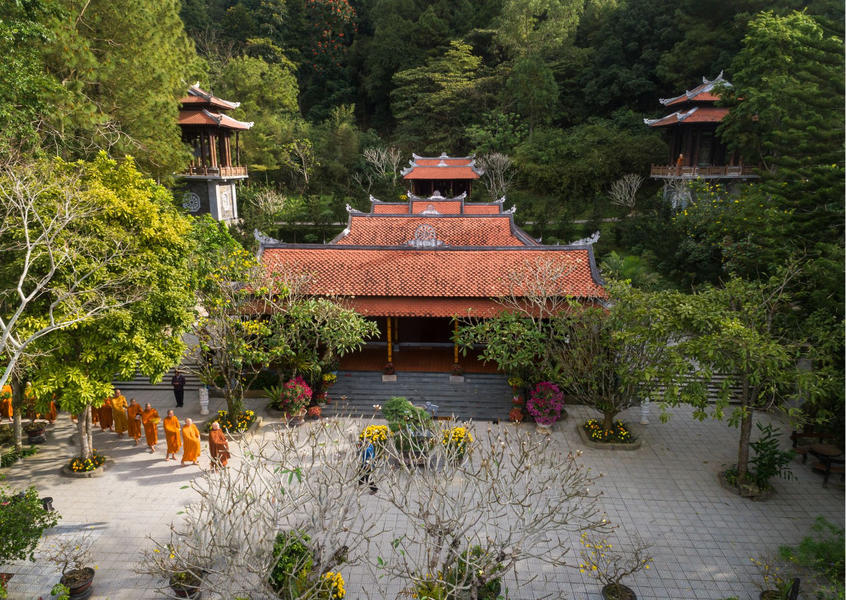
Tucked into a forest of pine trees some 15 kilometers from the city, the building offers a different quality of stillness altogether. The approach through forested mountain paths is part of the experience. Groups rarely make it here. Private guests who do often describe it as the highlight of their entire Vietnam journey.
For luxury travelers, Hue pairs beautifully with accommodations such as Azerai La Residence or Pilgrimage Village, both a short drive from the main pagoda circuit.
2.2. Hanoi: History, Contemplation, and Cultural Immersion
Hanoi’s Buddhist heritage is quieter, woven into the fabric of the Old Quarter and the lakes that define the city’s character.
Tran Quoc Pagoda
Tran Quoc Pagoda is located on a small island in West Lake. The pagoda, founded in the 6th century, is Vietnam’s oldest Buddhist temple. Early morning, before the city wakes, it offers a contemplative quality that disappears entirely by midday. A private tour timed for 6:30 AM gives you the pagoda almost entirely to yourself.
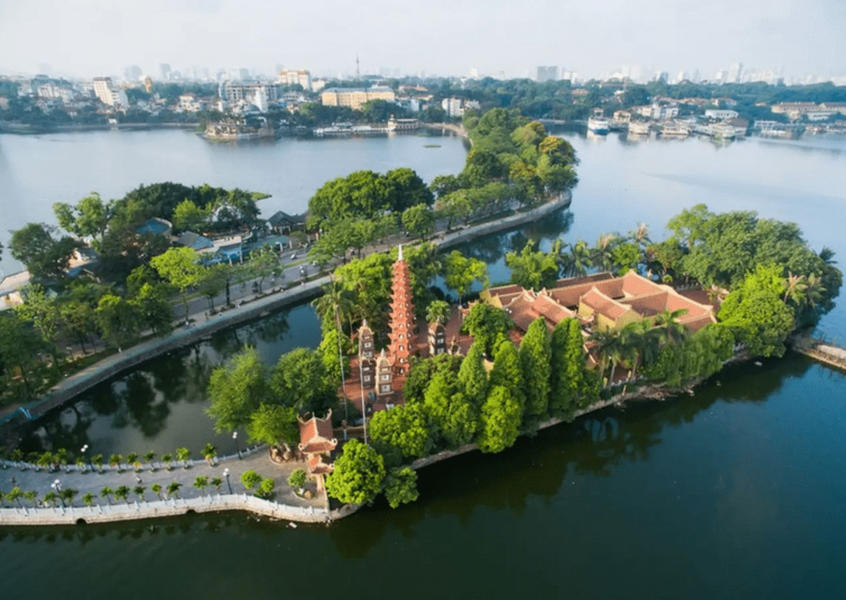
The Temple of Literature
While technically a Confucian temple, the Temple of Literature is deeply intertwined with Vietnam’s spiritual and scholarly identity. One luxury traveler described a private evening visit as “magical—we had the entire place to ourselves.” This kind of access is standard on a well-arranged private itinerary, impossible on a group tour.
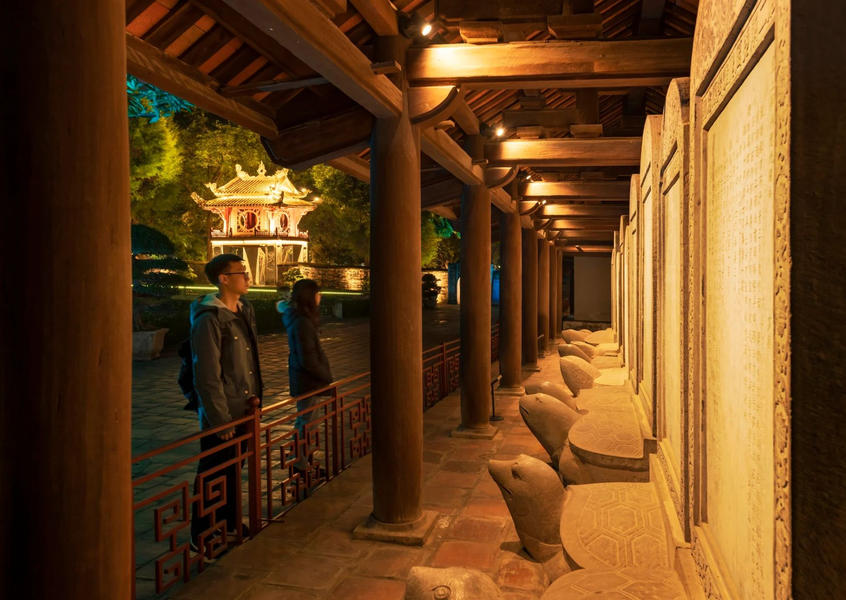
Yen Tu Mountain
Hanoi also serves as the gateway to Yen Tu Mountain, a half-day drive that brings you to the birthplace of Vietnamese Zen Buddhism. The landscape of ancient pagodas set into forested mountain terrain is unlike anything in the country. A private guide with deep knowledge of the Truc Lam Zen tradition transforms the visit from a scenic hike into a meaningful pilgrimage.
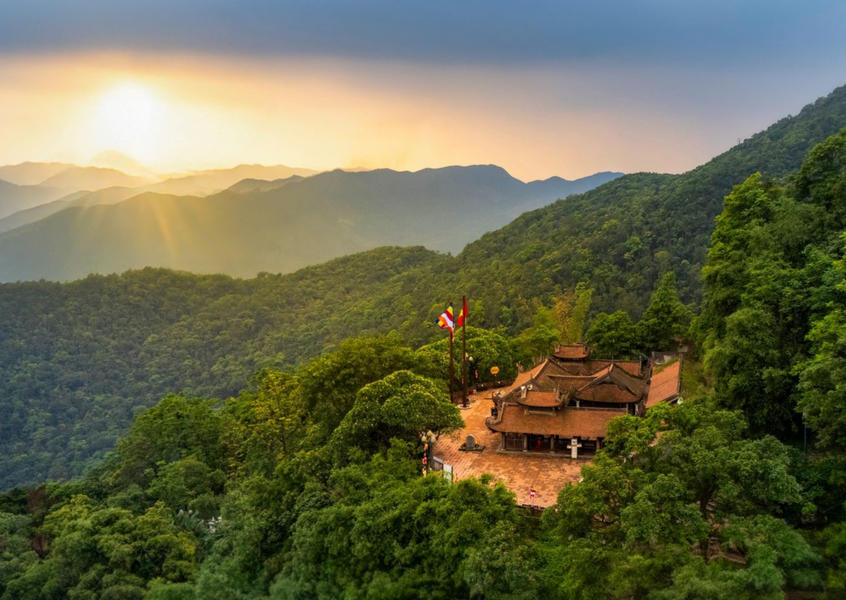
2.3. Ninh Binh: Sacred Architecture in a Landscape of Extraordinary Beauty
Ninh Binh is where Buddhist heritage and natural grandeur combine on a scale that is genuinely difficult to prepare for.
Bai Dinh Temple Complex
Known as the largest Buddhist temple complex in Southeast Asia, Bai Dinh Temple Complex covers over 700 hectares, featuring Vietnam’s tallest bronze Buddha statue and 500 stone-carved arhat figures lining the hillside approach. On a group day trip from Hanoi, visitors spend perhaps 90 minutes here. On a private itinerary, you build the day entirely differently: an early arrival by private vehicle before coach groups begin arriving, the freedom to ascend at your own pace, and a private boat through the Trang An waterways beforehand.
For the luxury traveler who wants to combine spiritual exploration with world-class accommodation, The Emeralda Resort Ninh Binh sits within the karst landscape and serves as an ideal base.
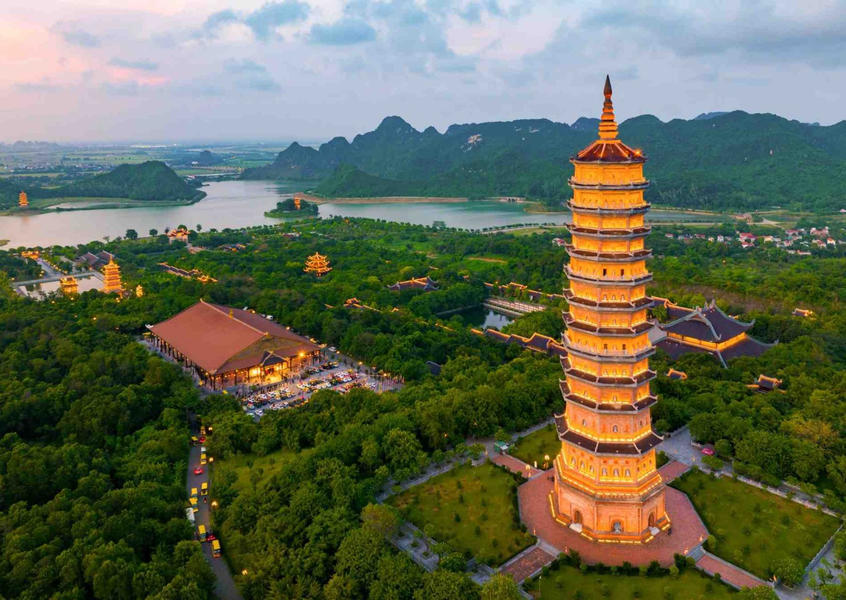
2.4. Hoi An: Where Zen Tradition Meets Coastal Luxury
Hoi An is best known for its UNESCO-listed Ancient Town and its cuisine. What fewer visitors know is that it also offers one of Vietnam’s most refined combinations of spiritual practice and luxury hospitality.
The Nam Hai
The Nam Hai, a Six Senses resort, has hosted mindfulness retreats drawing directly on the teachings of Thich Nhat Hanh. Sessions combine guided meditation, mindful walking on the beach, and talks with practitioners trained in the Vietnamese Zen tradition. This is not only a wellness retreat dressed in Buddhist aesthetics but also a carefully designed program with genuine depth.
The Ancient Town itself contains several beautifully preserved pagodas, including Chua Ong (Cantonese Assembly Hall) and Phuoc Lam Pagoda. A private walking tour through these sites, led by a guide who grew up in Hoi An, offers a texture of lived history that no audioguide can replicate.
3. Signature experiences only available on private temple tours
The most meaningful moments on a Buddhist temple tour in Vietnam are not scheduled. They are created by the right guide, at the right time, in the right place.
These are the experiences that private tours make possible:
- Dawn chanting with resident monks: Most temples hold morning prayers between 5 and 6 AM before they open to visitors. A private arrangement can include being welcomed into this ritual as a respectful observer, often described by guests as the most moving moment of their entire trip.
- Vegetarian feast cooked by Buddhist nuns: Several pagodas in Hue and Ninh Binh maintain kitchens where nuns prepare traditional Buddhist cuisine. Lunch shared in the temple courtyard, with seasonal vegetables grown on the grounds, eaten in contemplative silence, is an experience guests consistently describe as unexpected and deeply affecting.
- Private blessing ceremony with the abbot: At certain temples, it is possible to arrange a formal blessing ceremony conducted by senior monks. This requires advance coordination, respect for protocol, and local relationships built over years. It cannot be booked on an OTA.
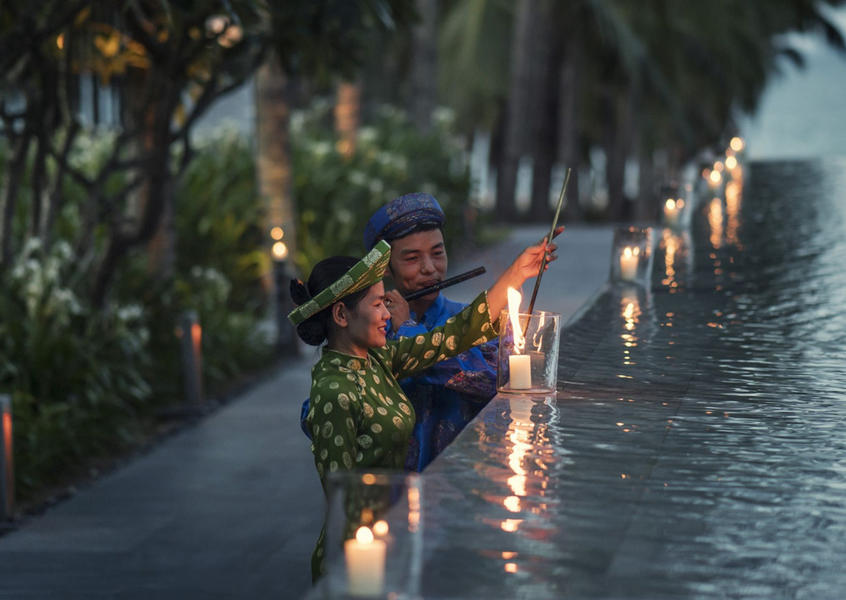
- Incense offering and prayer ritual instruction: Rather than watching from the doorway, guests learn how to offer incense properly, what the gestures mean, and how to form an intention in the Buddhist tradition. Small detail, profound difference.
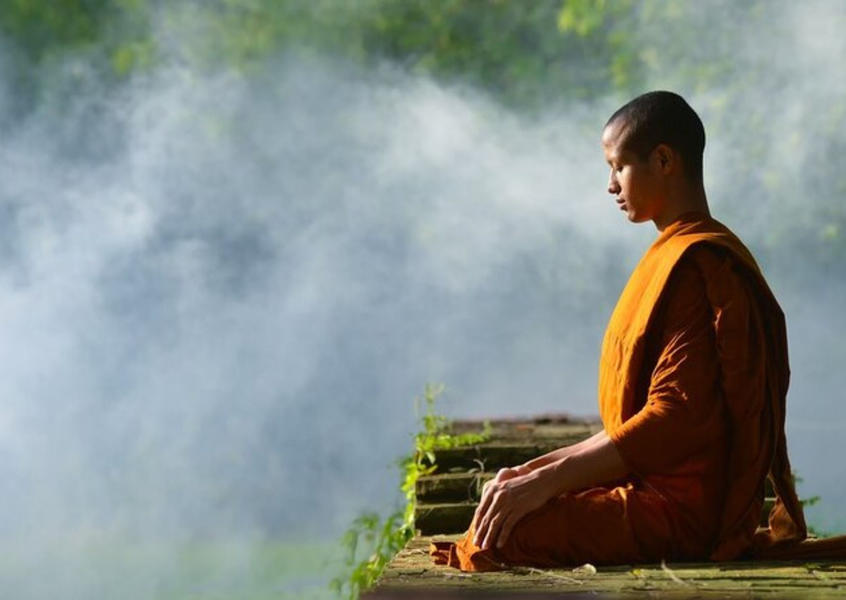
- Walking meditation on monastery grounds: Some hilltop monasteries, particularly in the Hue hills and around Tam Dao, offer space for guided walking meditation within their grounds. This is not merely a tourist activity but also an invitation extended through careful relationship-building.
4. Planning your private Buddhist temple tour: A practical guide
Duration: Allow a minimum of 5 days for a focused spiritual itinerary covering one or two destinations. For a multi-destination journey to famous destinations including Hanoi/Yen Tu, Ninh Binh, Hue, and Hoi An, 10 to 14 days is the appropriate frame.
Best time to visit: October through April offers the most comfortable temperatures across northern and central Vietnam. The Lunar New Year period (Tet, typically January/February) brings magnificent temple celebrations but also significant crowds; even on private tours, the atmosphere changes considerably. If attending Tet-season temple festivals, a knowledgeable private guide becomes even more essential.
Cultural etiquette: Shoulders and knees should be covered when entering temples. Remove shoes before entering prayer halls. Speak softly. Do not photograph monks without permission. A professional guide will brief you fully before each visit.
DMC versus international OTA: International booking platforms offer convenience, but they cannot replicate what a specialist DMC in Vietnam provides: direct relationships with temple administrators, the flexibility to modify itineraries in real time, and guides whose knowledge comes from growing up within the culture rather than from a training manual. For a luxury private tour, the guide is the product.
5. FAQs
What should I wear on a Buddhist temple tour in Vietnam?
Modest clothing covering shoulders and knees is required at all pagodas. Many temples provide sarongs at the entrance, but bringing your own light linen layers is more comfortable in warm weather.
Can I participate in meditation during a temple tour?
Yes. On a private tour, it is entirely possible to arrange brief sitting or walking meditation sessions, particularly at monasteries in Hue and Ninh Binh. The extent of participation depends on the temple and the relationships your tour operator has established with resident monks.
How long does a typical private Buddhist temple tour last?
A half-day private temple tour covers one or two sites in depth. A full-day tour allows for three sites with meals, travel, and genuine time at each location. Multi-day spiritual itineraries are also available for travelers wishing to combine temple visits across Hue, Hanoi, and Ninh Binh.
What makes Tonkin Legends different from booking temple tours online?
Tonkin Legends designs every itinerary from scratch, no fixed programs, no shared groups. Our guides are specialists in Vietnamese Buddhist history and culture. We have long-standing relationships with specific temples that allow for access and experiences not available through standard booking platforms.
Is a private Buddhist temple tour in Vietnam appropriate for non-Buddhists?
Completely. The temples of Vietnam welcome visitors of all backgrounds who approach with genuine curiosity and respect. Many guests who describe these visits as transformative have no prior connection to Buddhism. The beauty of the architecture, the depth of the history, and the extraordinary calm of these spaces speak across any spiritual boundary.
Vietnam’s pagodas are not merely beautiful places to visit. They are living repositories of a spiritual tradition that has shaped Vietnamese identity, philosophy, and daily life for over a thousand years.
A private tour does not simply make the experience more comfortable. It makes it more honest, slower, deeper, and closer to what these places actually are and what they can offer a traveler willing to give them time and attention.
Tonkin Legends designs private Buddhist temple itineraries tailored to the interests, pace, and preferences of each guest. Every guide is selected for both expertise and genuine passion. Every itinerary is built around you, not around what is easiest to arrange. Contact us to design your private Buddhist temple journey through Vietnam.

Comment (0)