
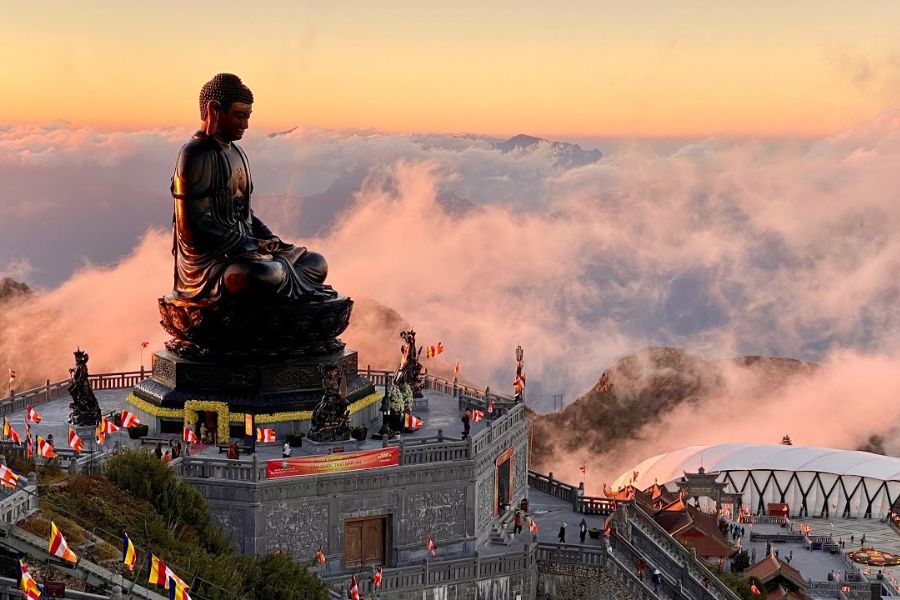
Vietnam’s spiritual landscape stretches from misty northern mountains to Mekong Delta temple towns, shaped by centuries of Buddhism, Taoism, Confucianism, and ancestor worship. For agents building itineraries for pilgrims, wellness travelers, or culturally curious clients, these ten sites cover every region and every level of accessibility, from a half-day trip out of Hanoi to a multi-day pilgrimage circuit.
1. Why Vietnam draws spiritual travelers
Vietnamese spirituality rarely fits into a single religion. Most sites blend Buddhist worship with Taoist ritual, Confucian philosophy, and deeply personal ancestor veneration. Catholicism adds another layer in the center and south, while Tay Ninh is home to Cao Dai, a home-grown religion that fuses Eastern and Western belief systems. This diversity means a single itinerary can expose travelers to several distinct spiritual traditions without leaving the country, a point worth highlighting for clients from India, where pilgrimage travel (tirtha yatra) is already a deeply familiar concept and Vietnam’s temple culture offers an easy cultural bridge.
2. At a glance: 10 spiritual destinations in Vietnam
| Destination | Region | Distance from nearest hub | Best time to visit |
| Yen Tu Mountain | Quang Ninh (North) | ~130 km / 3 hrs from Hanoi | Jan to Mar (spring festival) |
| Perfume Pagoda (Huong Pagoda) | Hanoi outskirts (North) | ~60 km / 1.5 hrs from Hanoi | Jan to Mar (Perfume Pagoda Festival) |
| Bai Dinh Pagoda | Ninh Binh (North) | ~95 km / 2 hrs from Hanoi | Year-round; Jan to Mar for festival crowds |
| Tam Chuc Pagoda | Ha Nam (North) | ~65 km / 1.5 hrs from Hanoi | Year-round; spring for lotus season |
| Thien Mu Pagoda | Hue (Central) | In Hue city | Year-round; early morning for light |
| Linh Ung Pagoda | Da Nang (Central) | ~10 km from Da Nang center | Year-round |
| Ba Den Mountain | Tay Ninh (South) | ~100 km / 2 hrs from Ho Chi Minh City | Nov to Feb (cooler weather) |
| Cao Dai Holy See | Tay Ninh (South) | ~95 km / 2 hrs from Ho Chi Minh City | Daily noon ceremony |
| Ba Chua Xu Temple | Chau Doc, An Giang (Mekong Delta) | ~250 km / 5-6 hrs from Ho Chi Minh City | Apr (Vía Bà Chúa Xứ festival) |
| Con Dao Memorial Sites | Con Dao Island (South) | Flight from Ho Chi Minh City (~50 min) | Mar to Sep (dry season) |
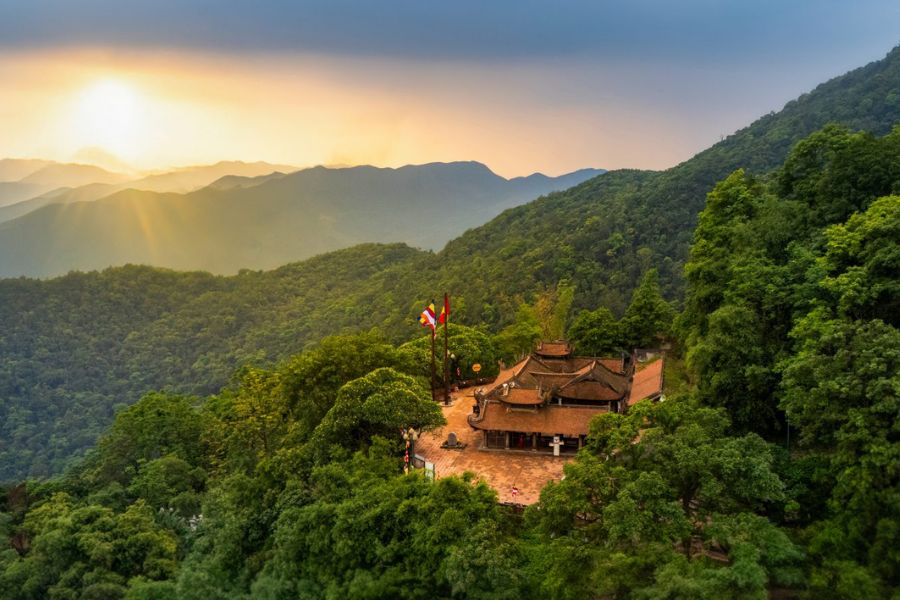
2.1. Yen Tu Mountain, Quang Ninh
- Location: Dong Trieu district, Quang Ninh province, near Ha Long Bay
- Best for: History-focused pilgrims, hikers
- Distance: About 130 km, roughly 3 hours by road from Hanoi
- Ideal season: January to March, during the Yen Tu Spring Festival
Known as the cradle of Vietnamese Buddhism, Yen Tu is where King Tran Nhan Tong gave up his throne in the 13th century to found the Truc Lam Zen sect. The climb to Dong Pagoda at the summit, either on foot or by cable car, passes centuries-old pagodas set among pine and bamboo forest. It pairs naturally with a Ha Long Bay cruise itinerary, giving agents an easy way to add a cultural anchor to a scenic route.
2.2. Perfume Pagoda (Chua Huong), Hanoi
- Location: My Duc district, about 60 km southwest of central Hanoi
- Best for: Day-trip groups from Hanoi, boat and cave experiences
- Distance: Around 1.5 hours by road plus a boat ride along the Yen Stream
- Ideal season: January to March, when the Perfume Pagoda Festival draws large domestic crowds
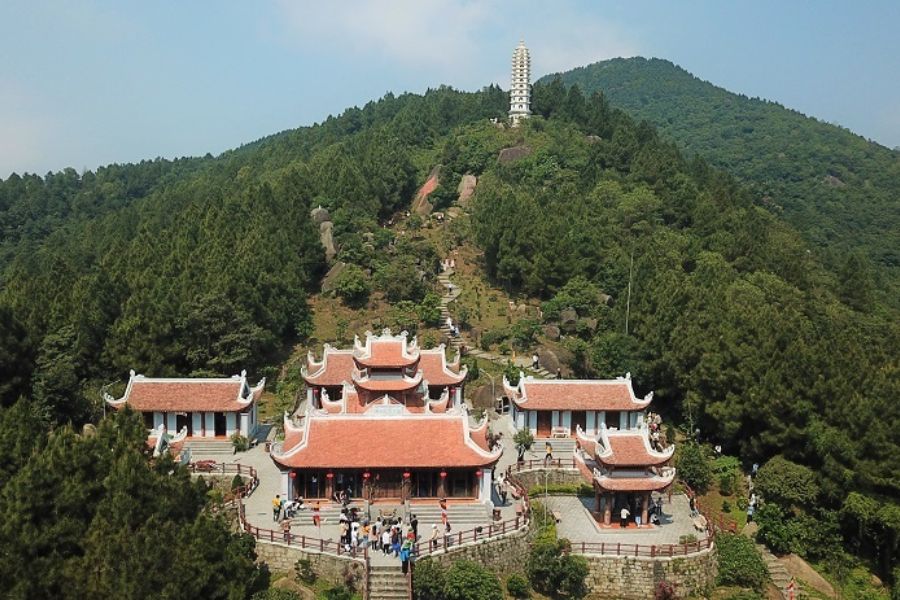
The complex spans more than 4,900 hectares of pagodas, shrines, and limestone caves dedicated to Buddha and local agricultural deities. The boat approach along the Yen Stream is part of the experience, making it well suited to half-day group excursions that combine scenery with worship.
2.3. Bai Dinh Pagoda, Ninh Binh
- Location: Gia Vien district, Ninh Binh province
- Best for: Large groups, architecture and record-holding attractions
- Distance: About 95 km, roughly 2 hours from Hanoi
- Ideal season: Year-round; expect heavier crowds during the Lunar New Year period
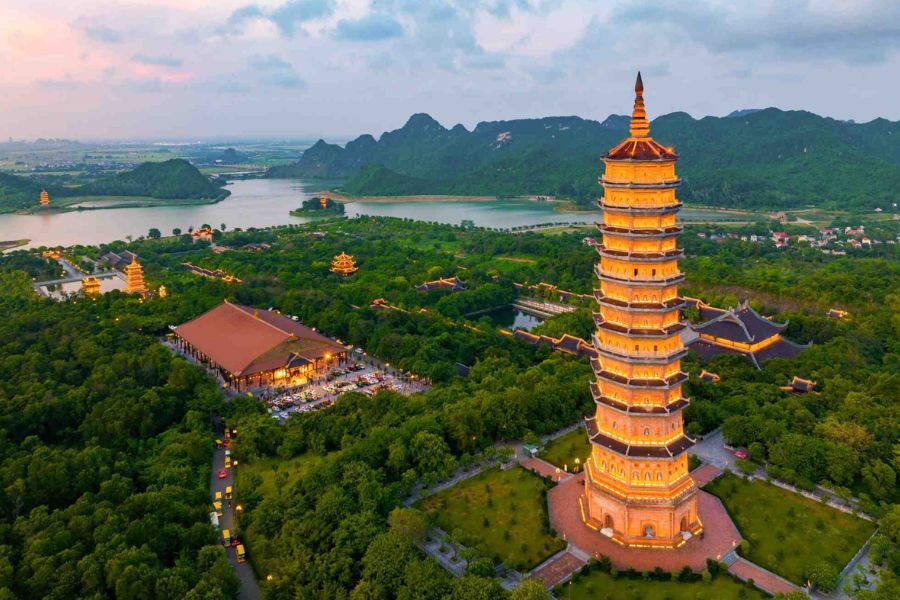
Bai Dinh is Southeast Asia’s largest pagoda complex, home to the region’s biggest bronze Buddha statue and a corridor of 500 Arhat statues. Its scale and paved walkways make it one of the more accessible sites for older travelers or larger coach groups, and it sits close enough to Trang An and Tam Coc to fold into a full-day Ninh Binh itinerary.
2.4. Tam Chuc Pagoda, Ha Nam
- Location: Kim Bang district, Ha Nam province
- Best for: Photography-driven itineraries, lakeside scenery
- Distance: About 65 km, 1.5 hours from Hanoi
- Ideal season: Year-round; spring for blooming lotus ponds
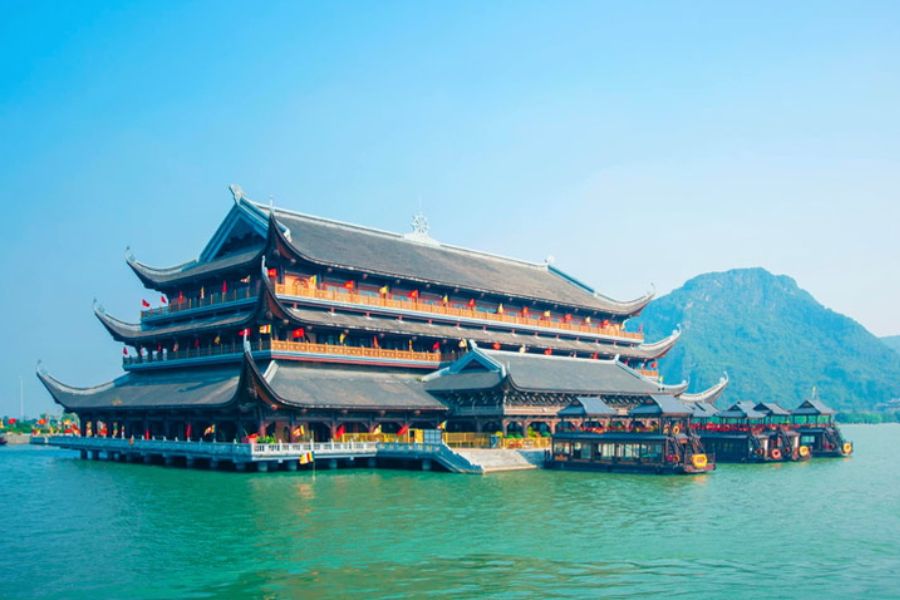
One of Vietnam’s newest and largest pagoda complexes, Tam Chuc blends traditional pagoda architecture with a modern layout around a natural lake ringed by limestone mountains. Its proximity to Hanoi and relatively lighter crowds compared to Bai Dinh make it a strong alternative for agents looking to avoid festival-season congestion.
2.5. Thien Mu Pagoda, Hue
- Location: On the banks of the Perfume River, Hue city
- Best for: Combining with Hue’s imperial heritage sites
- Distance: Within Hue city, easily reached by dragon boat or car
- Ideal season: Year-round; early morning light is ideal for photography
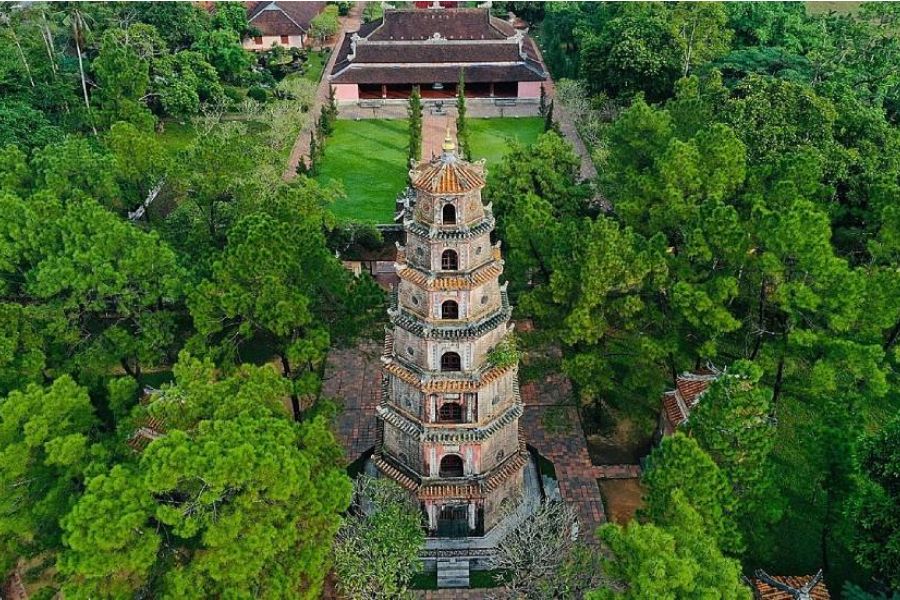
Thien Mu’s seven-tiered octagonal tower is one of the most photographed religious structures in central Vietnam. A dragon boat ride down the Perfume River to reach it fits naturally alongside a Hue Citadel and Imperial Tombs itinerary, giving agents a low-effort add-on for heritage-focused clients.
2.6. Linh Ung Pagoda, Da Nang
- Location: Son Tra Peninsula, Da Nang
- Best for: Coastal views, short excursions from beach resorts
- Distance: About 10 km from central Da Nang
- Ideal season: Year-round
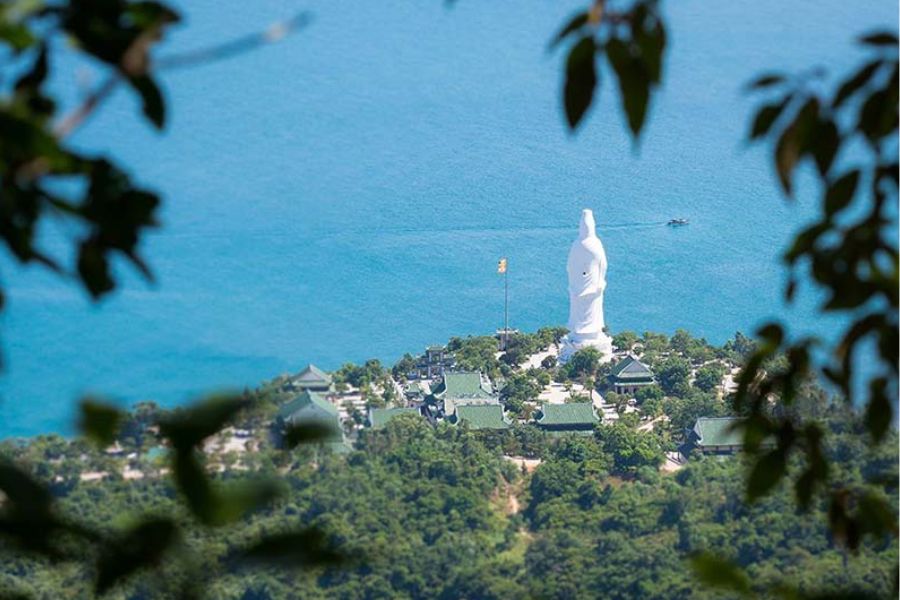
Home to Vietnam’s tallest Lady Buddha statue overlooking the East Sea, Linh Ung is an easy half-day stop for clients based at Da Nang or Hoi An beach resorts who want a cultural break between beach days.
2.7. Ba Den Mountain, Tay Ninh
- Location: Tay Ninh province, about 100 km from Ho Chi Minh City
- Best for: Hikers, cable car access, panoramic views
- Distance: Roughly 2 hours by road from Ho Chi Minh City
- Ideal season: November to February, when temperatures are cooler for the summit walk
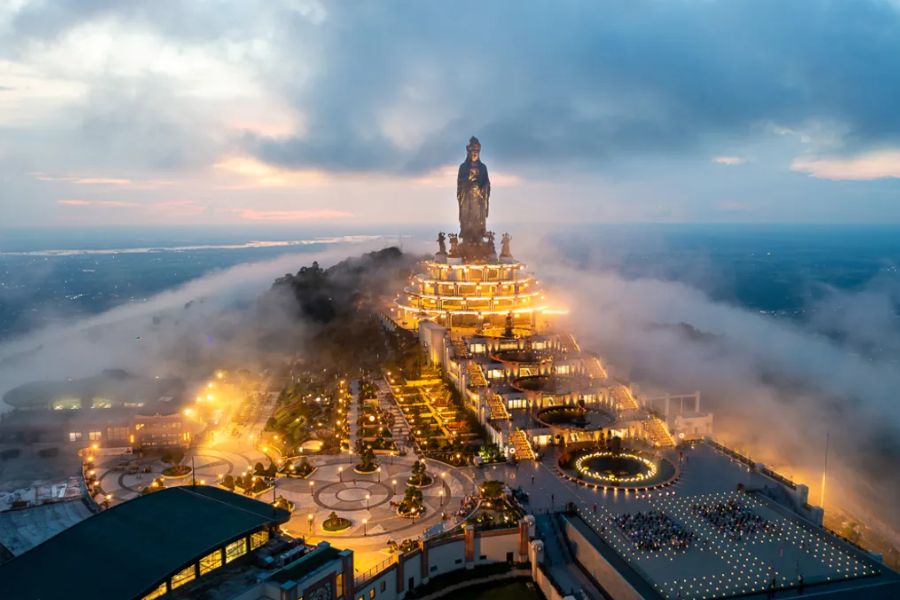
At 986 meters, Ba Den is the highest peak in southern Vietnam and known locally as the Roof of the South. A modern cable car system has made the summit and its Maitreya Bodhisattva statue accessible without a demanding hike, which widens the site’s appeal for mixed-age tour groups.
2.8. Cao Dai Holy See, Tay Ninh
- Location: Tay Ninh city, near Ba Den Mountain
- Best for: Clients interested in comparative religion, unique cultural content
- Distance: Roughly 2 hours from Ho Chi Minh City, easily paired with Ba Den Mountain
- Ideal season: Daily; the noon ceremony at 12:00 is the main draw
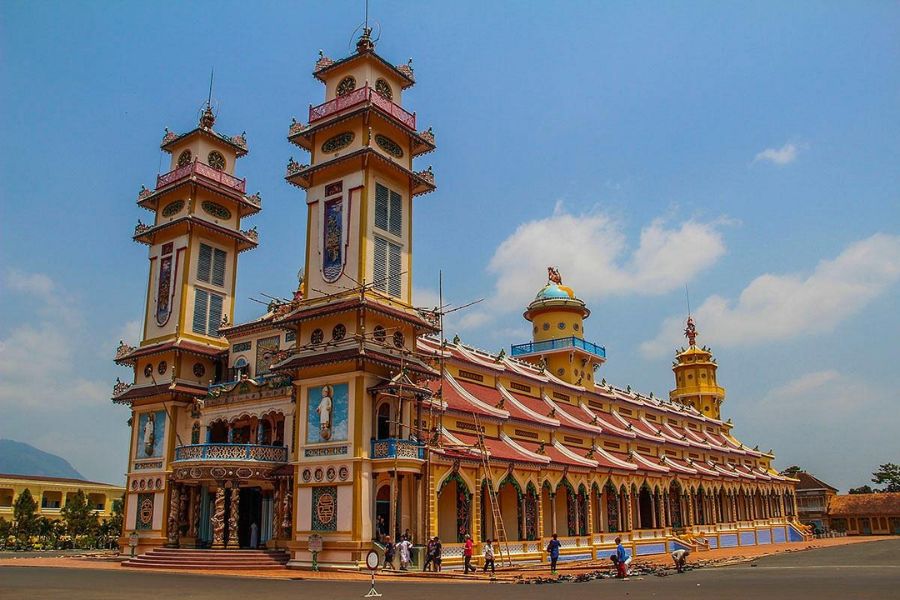
The Cao Dai Holy See is the seat of Caodaism, a Vietnamese religion founded in 1926 that combines elements of Buddhism, Taoism, Confucianism, Christianity, and Islam under a single eye symbol. Watching the colorful midday ceremony gives international visitors, particularly those unfamiliar with syncretic belief systems, one of the more distinctive religious experiences in Southeast Asia. It sits close enough to Ba Den Mountain to combine both into one day trip from Ho Chi Minh City.
2.9. Ba Chua Xu Temple, Chau Doc
- Location: Sam Mountain, Chau Doc city, An Giang province, Mekong Delta
- Best for: Mekong Delta itineraries, festival-season travel
- Distance: About 250 km, 5 to 6 hours from Ho Chi Minh City by road, or shorter by combined boat and road routes
- Ideal season: The fourth lunar month, when the Via Ba Chua Xu Festival draws pilgrims from across southern Vietnam
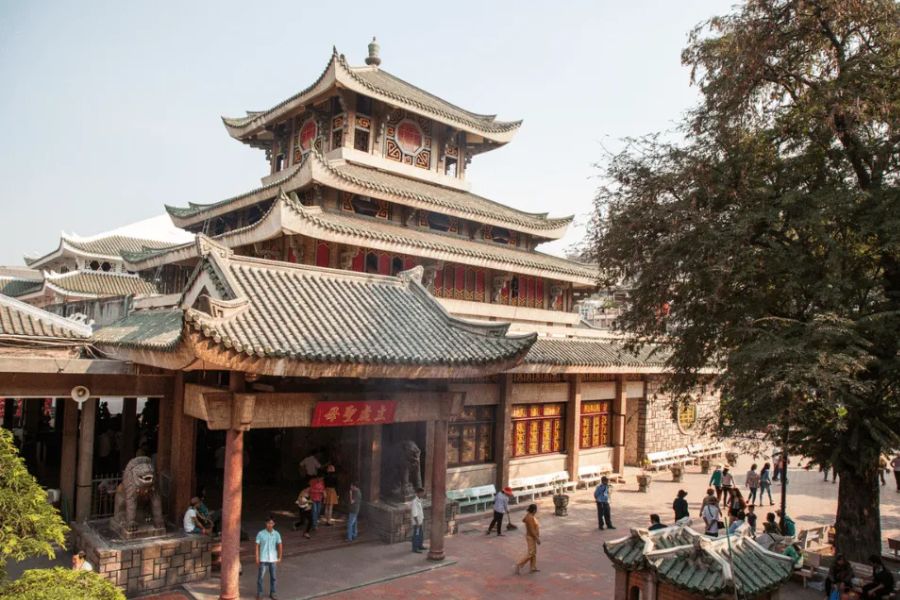
Dedicated to the Lady of the Realm, this temple is one of the most visited pilgrimage sites in southern Vietnam, drawing worshippers who come to pray for prosperity and good fortune. It works well as an overnight extension for agents building deeper Mekong Delta programs beyond the standard Cai Rang floating market day trip.
2.10. Con Dao Memorial Sites, Con Dao Island
- Location: Con Dao archipelago, off Vietnam’s southern coast
- Best for: Reflective, historically minded travelers; combining spirituality with beach time
- Distance: About 50 minutes by direct flight from Ho Chi Minh City
- Ideal season: March to September, the dry season
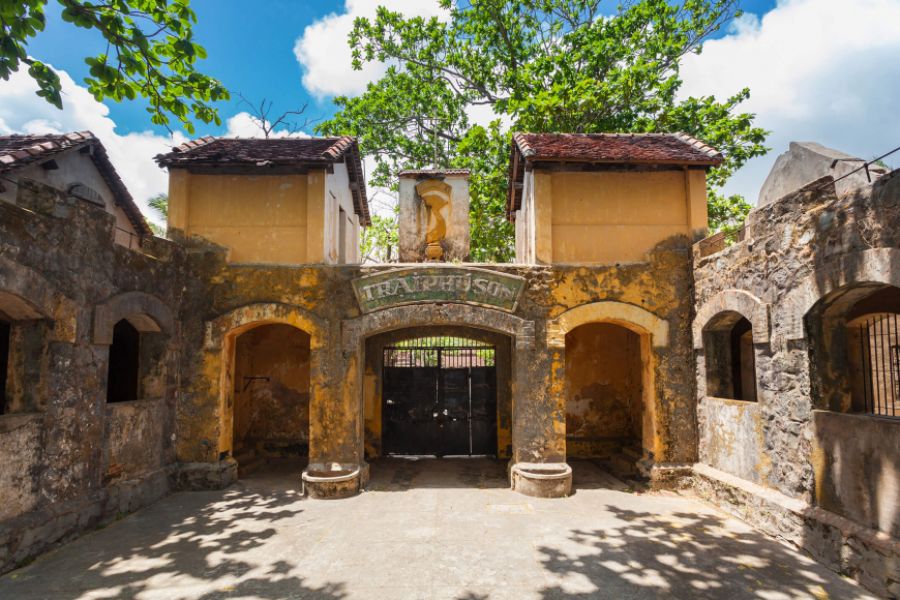
Con Dao’s spiritual significance is tied to its history as a former prison island. Sites such as Hang Duong Cemetery and Phu Hai Prison have become places of remembrance and reflection, complemented by the Me Con Dao temple. It is an unusual pairing of pristine beaches and solemn history that suits clients looking for a more contemplative add-on to a beach-focused Vietnam itinerary.
3. Notes for travel agents planning a spiritual itinerary
- Group size and access: Bai Dinh, Tam Chuc, and Ba Den Mountain have the paved paths and cable car infrastructure to comfortably handle larger coach groups. Yen Tu and the Perfume Pagoda require more walking or boat transfers, so factor in mobility levels when building group itineraries.
- Dress code: Most pagodas and temples expect shoulders and knees covered. Briefing clients in advance, or carrying a few light shawls on the coach, avoids delays at the entrance.
- Festival season crowding: The first three months of the lunar calendar bring the heaviest domestic pilgrim traffic to northern sites like Yen Tu, Perfume Pagoda, and Bai Dinh. Agents targeting a quieter, more contemplative experience for clients should schedule outside this window.
- Regional pairing: Grouping sites by region, Ba Den Mountain with Cao Dai Holy See, or Thien Mu Pagoda with Hue’s imperial sites, keeps drive times manageable within a single day.
- Photography and drone use: Some sites restrict drone photography or charge separate fees for professional camera equipment; confirming current rules before departure avoids on-the-ground surprises.
Ready to build a spiritual journey itinerary for your clients? Tonkin Legends handles the logistics, from private guides to group transport across these regions, so you can offer your clients a seamless pilgrimage through Vietnam’s sacred heritage. Partner with us to start planning your next itinerary.
4. FAQ
What is the most important spiritual destination in Vietnam?
Yen Tu Mountain in Quang Ninh province holds particular significance as the founding site of the Truc Lam Zen Buddhist sect, making it one of the most historically important pilgrimage destinations in the country.
Which spiritual destination is easiest to visit as a day trip from Hanoi?
The Perfume Pagoda and Tam Chuc Pagoda are both within 1.5 to 2 hours of central Hanoi and can be visited comfortably in a single day.
Are Vietnam’s spiritual sites suitable for large tour groups?
Yes. Bai Dinh Pagoda, Tam Chuc Pagoda, and Ba Den Mountain all have wide paved access and cable car systems designed to handle high visitor volumes, making them practical choices for coach groups.
Is Vietnam a good destination for Indian travelers interested in spiritual tourism?
Vietnam’s blend of Buddhist pilgrimage sites, temple architecture, and syncretic religious traditions offers Indian travelers, many of whom already have a strong cultural connection to pilgrimage travel, an accessible and unfamiliar spiritual landscape to explore alongside more conventional sightseeing.

Comment (0)