
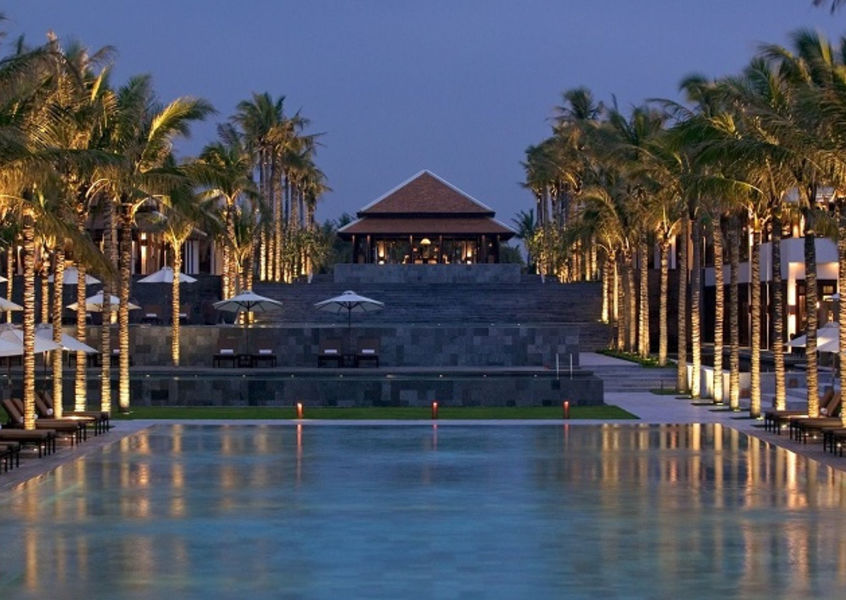
Vietnam offers some of Southeast Asia’s most diverse luxury wellness retreats, from Japanese onsen thermal therapy in the Hue highlands to island seclusion accessible only by speedboat off the Nha Trang coast.
This guide breaks down 7 distinct types of luxury wellness retreat in Vietnam, each matched to a specific therapeutic goal, a flagship property, and a realistic price and duration benchmark, so tour operators and travelers alike can make a precise, informed choice.
1. Thermal Mineral Spring Retreat For Deep Physical Recovery
Wellness objective: Musculoskeletal relief, skin restoration, nervous system regulation, post-injury or post-surgery recovery
Where in Vietnam: Hue Province (central highlands), Quang Binh
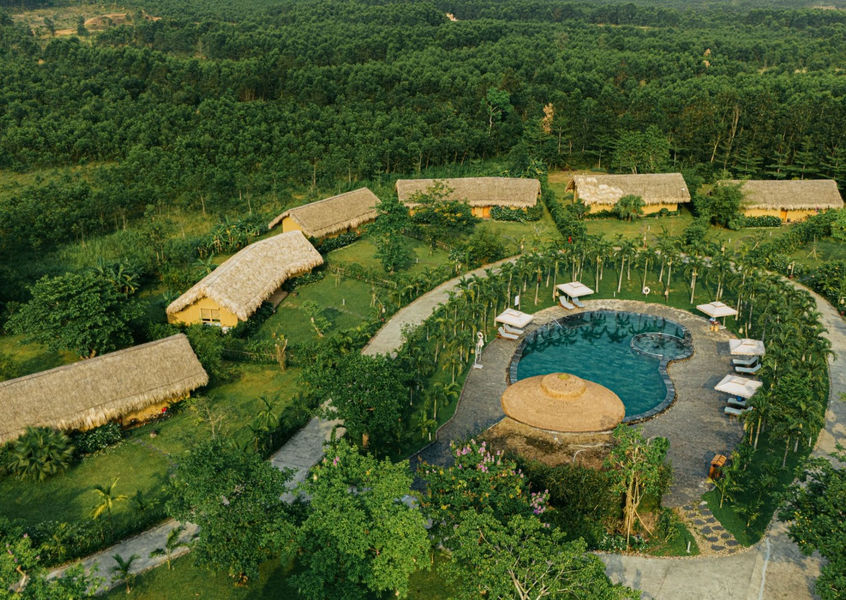
Alba Wellness Valley by Fusion (Hue)
Set within 50 hectares of natural landscape at the source of the thermal springs, Alba offers the only seven-step Japanese Onsen sequence in Vietnam. The program moves guests through a calibrated series of thermal pools, cold plunge baths, steam rooms, and rest pavilions following the traditional Japanese sequence designed to progressively regulate circulation and cortisol output. Bamboo bungalow accommodation with a private garden, rainshowers, and a bicycle for in-resort exploration completes the picture. Rates start from approximately USD 150 per night.
Also consider: Thap Ba Hot Springs in Nha Trang for guests combining thermal therapy with a coastal stay. Though less immersive than Alba as a standalone retreat, the mineral profile is particularly valued for skin conditions and respiratory health.
Recommended duration: 3–5 nights minimum. The full physiological benefit of repeated thermal cycling is documented from day 3 onward; shorter stays produce relaxation but not the systemic adaptation effect.
2. Highland Herbal Healing Retreat For Authentic Traditional Medicine Immersion
Wellness objective: Detoxification, immune restoration, herbal medicine education, reconnection with nature
Where in Vietnam: Sapa (Lao Cai Province), Mai Chau (Hoa Binh Province), Da Lat (Lam Dong Province)
Vietnam possesses one of Southeast Asia’s richest living pharmacopeias. The northern and central highlands have sustained unbroken traditions of plant-based healing for centuries. The Tue Tinh tradition of Vietnamese herbal medicine, distinct from both Chinese and Indian Ayurvedic systems, draws on over 3,900 documented medicinal plant species native to the country’s highland ecosystems.
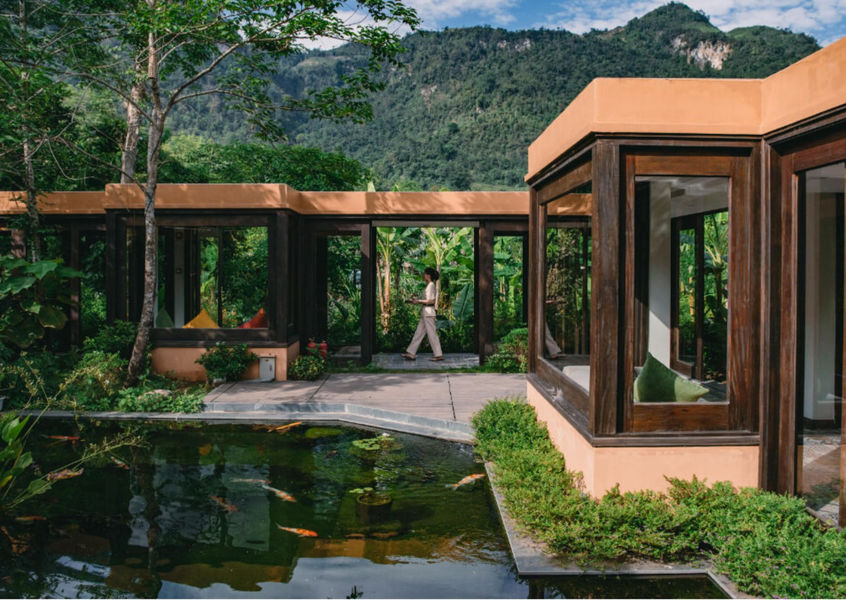
Avana Retreat (Mai Chau)
A 15-hectare eco-luxury retreat set among three ethnic minority communities such as H’mong, Thai, and Muong. The Orchid Spa sources its herbal ingredients directly from the surrounding forest and local highland farmers. Treatments include highland herbal compress massage, medicinal herb steam baths, and traditional Vietnamese remedies calibrated to the season and the guest’s constitution. The retreat’s signature experience is a private sunset at Pung Waterfall with a personalized herbal consultation. 36 luxury villas are set into the hillside, each with a private pool overlooking the valley. Rates from approximately USD 200 per night.
For deeper medical immersion: In Sapa, through select DMC partners, guests can arrange private consultations with ethnic minority healers, specifically H’mong herbalists whose knowledge of highland medicinal plants includes species not documented in conventional Vietnamese pharmacology. These sessions are not available through international booking platforms and require ground operator relationships.
3. Spa-Inclusive Wellness Retreat For Structured Daily Programs Without Per-Treatment Pricing
Wellness objective: Consistent daily therapeutic treatment, habit formation, stress recovery within a structured daily rhythm
Where in Vietnam: Da Nang (central coast), Cam Ranh (Khanh Hoa Province)
The spa-inclusive retreat model eliminates the cognitive friction of per-treatment pricing that disrupts genuine therapeutic focus. Guests who are mentally calculating the cost of each session are not relaxing; they are budgeting. Vietnam has two properties that execute the inclusive model at a five-star level.
TIA Wellness Resort (Da Nang)
Asia’s pioneering spa-inclusive resort, TIA includes two 80-minute treatments per guest per night in every room rate. The spa philosophy is structured around four pillars: Breathe (breathwork and nervous system regulation), Flow (yoga and movement), Nourish (therapeutic nutrition), and Create (mindfulness and creative practice). Daily complimentary activities such as yoga classes, creative workshops, mindfulness sessions, give guests a program architecture without a rigid schedule.
TIA’s Retreat Inclusive tier goes further: guests receive a dedicated TIA Wellness Guide who personally tailors the therapeutic focus, daily rhythm, and plant-based full-board meal plan to the individual. One exclusive 60-minute retreat therapy per night is added to the standard 80-minute treatment allocation. Rates for the Wellness Inclusive package start from approximately USD 450 per night for a private pool villa.
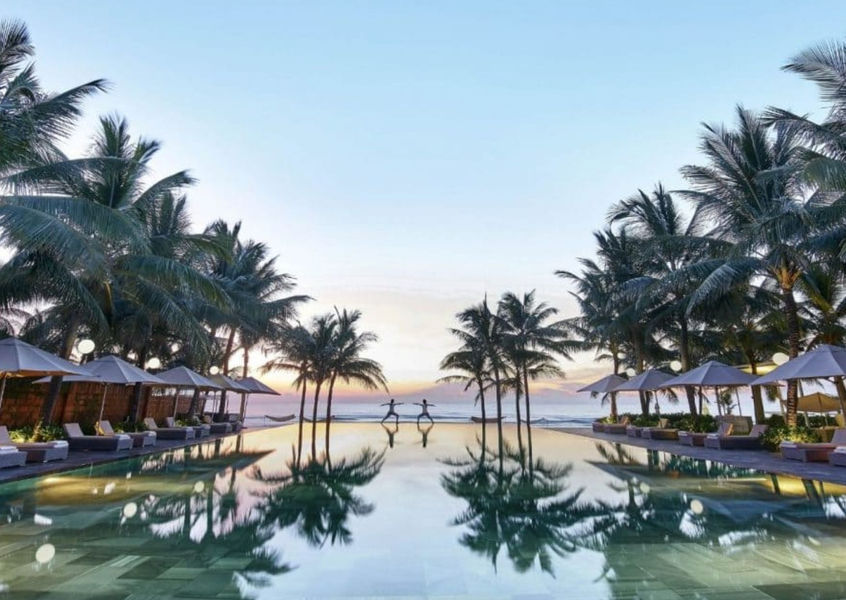
Fusion Resort Cam Ranh
At a lower price point, Fusion Resort Cam Ranh provides one complimentary spa treatment per guest per day, included in the rate. The property sits on a pristine stretch of Cam Ranh Bay coast, less commercially developed than Da Nang. For operators building itineraries with a strong wellness component but a tighter budget threshold, Fusion Cam Ranh delivers the inclusive model at a more accessible entry point.
Recommended duration: 4–7 nights to engage meaningfully with the program arc. The physiological benefit of repeated daily treatment accumulates from day 3 onward; a 2-night stay delivers relaxation, not restoration.
4. Island Seclusion & Marine Wellness Retreat For Complete Disconnection
Wellness objective: Full psychological decompression, digital detox, sensory restoration through marine environment immersion
Where in Vietnam: Ninh Van Bay (Nha Trang), Con Dao Archipelago, Vinh Hy Bay (Ninh Thuan)
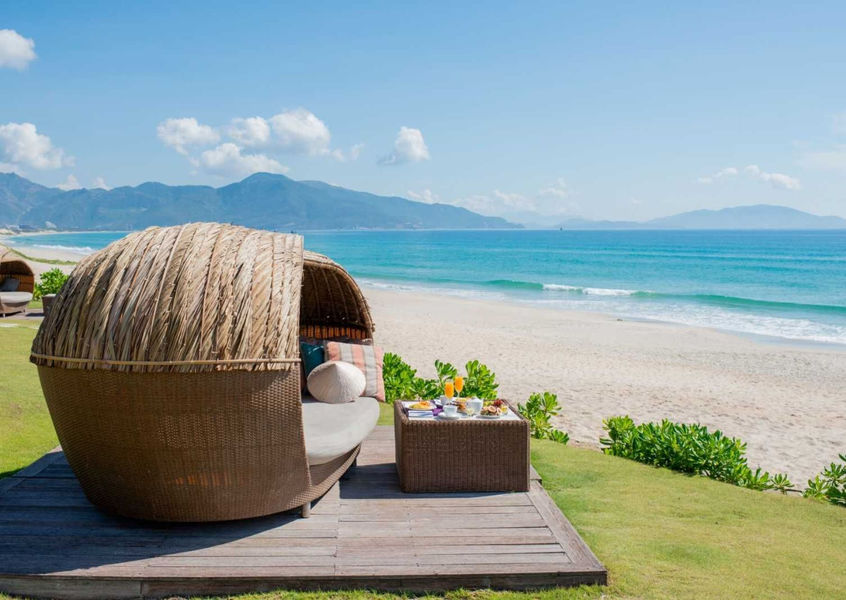
The psychological mechanism behind a marine wellness retreat is straightforward but underestimated: the act of physically crossing water to reach a retreat produces a measurable mental state shift that cannot be replicated by driving to a hotel. For high-net-worth clients whose stress is rooted in accessibility and constant availability, island access restriction is not a logistical inconvenience. It is the primary therapeutic intervention.
Six Senses Ninh Van Bay (Nha Trang)
62 private pool villas distributed across beach, water, rock, and hillside positions on a dramatic granite-boulder bay. Accessible exclusively by a 15-minute speedboat transfer from the resort’s Nha Trang jetty. The Six Senses Spa occupies treatment pavilions embedded into the hillside, offering customized detox programs, unlimited wellness consultations, and a yoga and meditation pavilion with bay views. Every Guest Experience Maker (GEM) is trained to manage the wellness program as well as the logistical stay.
Rates range from USD 824 per night in low season (June) to USD 1,489 per night at peak (January), the widest seasonal spread of any property in this guide. Booking June through August saves approximately 45% against the January peak while delivering superior water clarity for snorkeling and diving.
Amanoi (Ninh Thuan Province)
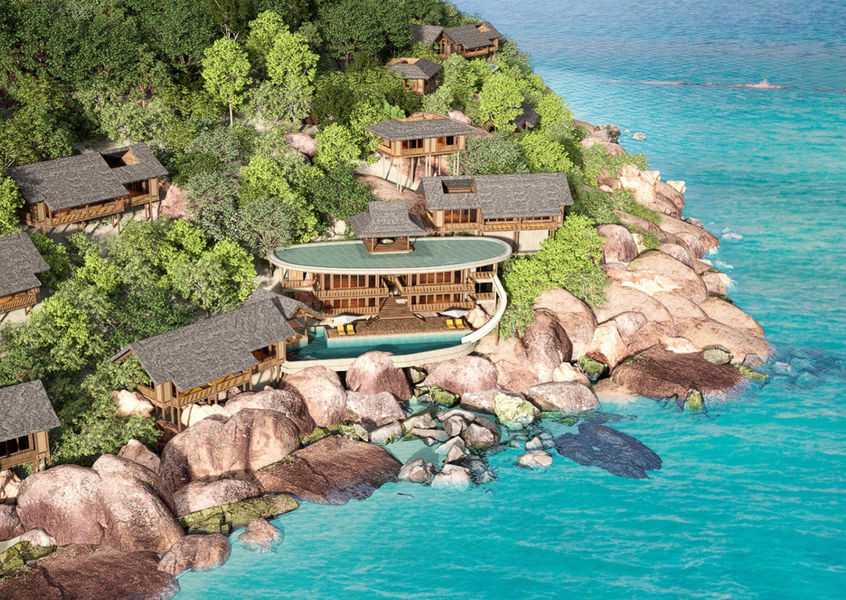
The Aman group’s Vietnam debut, perched on a hillside promontory within Nui Chua National Park, one of Vietnam’s largest natural conservation areas overlooking Vinh Hy Bay. The Aman Spa here offers three Aman Signature Journeys: multi-therapy healing sequences using locally sourced natural ingredients. The property’s defining quality is silence. It reaches a level of acoustic privacy that even Six Senses Ninh Van Bay, with its activity-oriented programming, does not match. For clients who define wellness as the cessation of stimulation rather than the addition of therapeutic inputs, Amanoi is the correct choice. Rates from approximately USD 800 per night.
Six Senses Con Dao
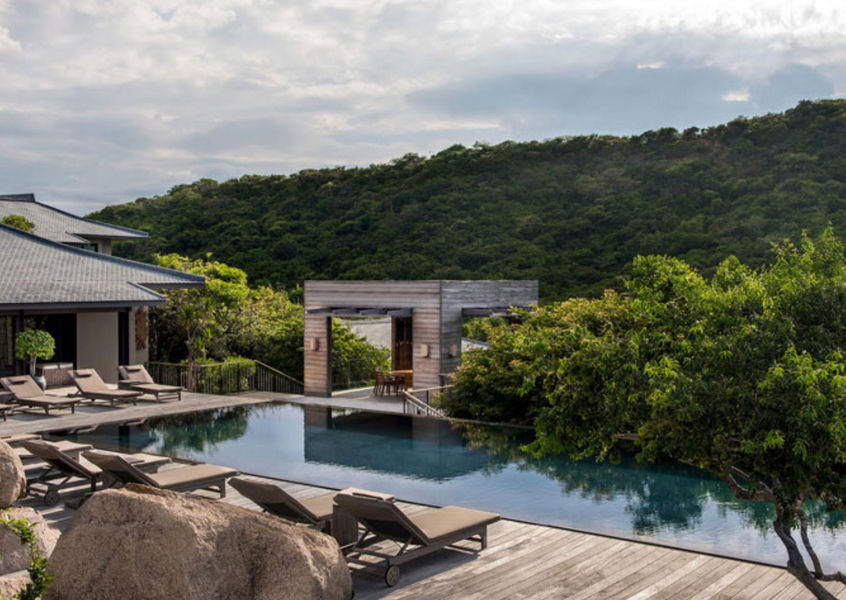
The Con Dao archipelago, served by domestic flights from Ho Chi Minh City (45 minutes) or a 3-hour fast boat, has no traffic, no commercial strip, and a functional marine conservation program. Six Senses Con Dao integrates turtle conservation monitoring and coral reef restoration experiences into the guest activity program, adding an ethical dimension that resonates with environmentally motivated luxury travelers. This is the correct property for clients who want marine seclusion with active purpose.
Recommended duration: 4 nights minimum at any island property. The boat transfer creates genuine logistical overhead that makes anything shorter feel transactional. 5–7 nights is the sweet spot.
5. Yoga & Mindfulness Retreat For Practice-Centered Guests
Wellness objective: Deepening yoga practice, establishing meditation habits, breathwork proficiency, mental clarity
Where in Vietnam: Da Nang, Hoi An, Hue, Phu Quoc
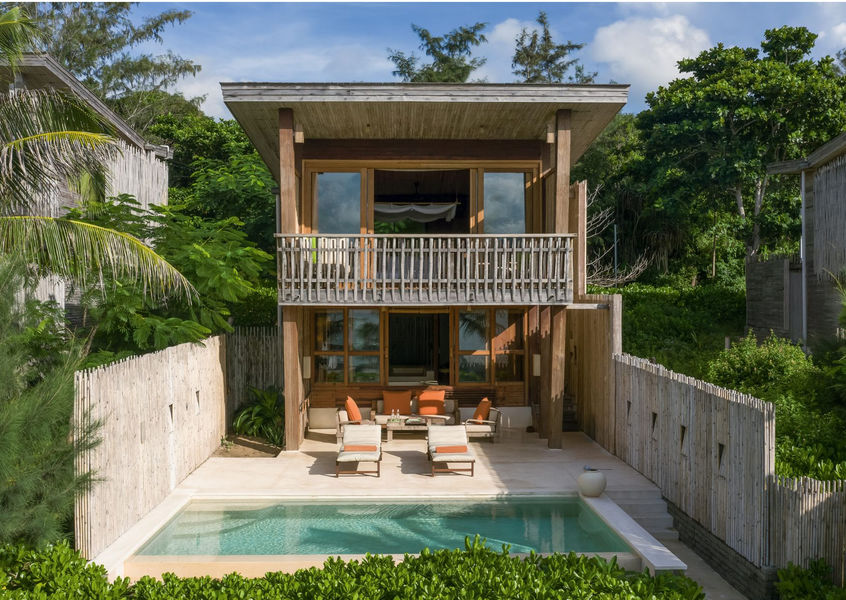
Vietnam has developed a credible yoga retreat infrastructure over the past decade, anchored by properties with resident yoga instructors, not just visiting teachers on rotation and program structures that support both beginner and advanced practitioners.
Naman Retreat (Da Nang)
Located on the coastal road between Da Nang and Hoi An, Naman’s Pure Spa occupies an expansive facility with 15 treatment rooms, Jacuzzi baths, saunas, steam rooms, a fitness centre, and dedicated yoga spaces. The structured “Wellness Yoga Retreat” program (a 3-day, 2-night package combining yoga, meditation, and holistic therapies) is one of the few packaged yoga programs in Vietnam designed for group bookings, making it particularly relevant for MICE incentive extensions and corporate wellness retreats. The property’s bamboo and stone architecture creates a genuinely contemplative atmosphere without the aggressively wellness-branded aesthetic of some competing properties. Rates from approximately USD 180 per night.
For Indian travelers specifically: Both TIA Wellness Resort and The Anam Resort in Nha Trang have employed resident Indian yoga instructors, specifically for Hatha Yoga with pranayama and breathwork components.
For Indian guests who practice yoga as a daily discipline rather than a holiday activity, a resident Indian instructor calibrating sessions to individual ability is a meaningful differentiator that should be confirmed at booking.
Recommended duration: 3–5 nights for a structured program. The 3-day Naman program is the minimum meaningful yoga retreat in Vietnam; 5 nights allows progressive practice development.
Read more:
- Best Spa Resorts in Vietnam (2026 Updated)
- The Best Private Buddhist Temple Tour in Vietnam for Discerning Travelers
6. Detox & Nutrition Retreat For Metabolic Reset and Digestive Restoration
Wellness objective: Liver and digestive system rest, anti-inflammatory dietary reset, weight management, cellular renewal
Where in Vietnam: Hoi An, Da Nang, Phu Quoc
Vietnam’s food culture is structurally aligned with the therapeutic nutrition principles underlying any serious detox program: low-fat protein (fresh river fish, steamed shellfish, silken tofu), fermented vegetables (dưa cải, kim chi-adjacent pickles), aromatic medicinal herbs (fresh turmeric, lemongrass, perilla), and an absence of heavy dairy or processed ingredients. A Vietnamese detox program is not a departure from the local cuisine, it is an intensification of it.
Namia River Retreat (Hoi An)
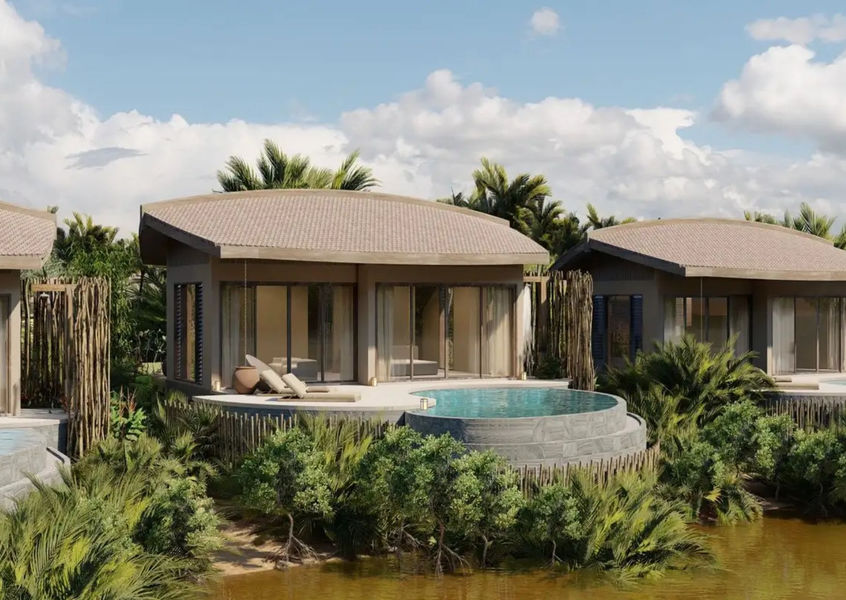
Located on the quiet Cồn Ba Xã islet in Hoi An, accessible by a short private boat crossing from the ancient town, Namia is purpose-built around the intersection of Vietnamese herbology and culinary therapy. The property’s all-inclusive Vietnamese herbal detox program combines personalized wellness therapies, nourishing cuisine from The Merchant Restaurant (showcasing Vietnamese herbs and locally grown produce), and a private riverside environment designed for complete renewal. Every stay includes a 90-minute daily wellness journey (30 minutes hydrotherapy + 60 minutes traditional therapy) as a baseline inclusion. The Lumina Spa begins with a traditional apothecary visit where guests select their own herbal remedies before entering the treatment sequence.
Almanity Hoi An Resort & Spa
Positioned within walking distance of Hoi An’s ancient quarter, Almanity offers farm-to-table dining with organic and herbal inclusions, Onsen facilities, and a structured holistic well-being program. Suitable for guests who want detox nutrition principles integrated with cultural access rather than full retreat seclusion.
Recommended duration: 3–7 nights. A 3-night herbal detox produces initial systemic effects; 5–7 nights allows the digestive rest and dietary recalibration to produce measurable outcomes in energy levels and inflammation markers.
7. Spiritual & Cultural Wellness Retreat For Guests Seeking Meaning Alongside Restoration
Wellness objective: Psychological integration, contemplative practice, cultural immersion, finding stillness within a historically significant landscape
Where in Vietnam: Hue, Hoi An, Hanoi outskirts, Ha Long Bay
The fastest-growing segment within Vietnam wellness tourism is what some operators are calling the “meaningful travel” tier: guests who want not just to feel better physically, but to encounter something larger than themselves. For this profile, wellness and culture are not competing itinerary components, they are the same thing.
Private Sunrise Practices at UNESCO Heritage Sites
Through Tonkin Legends’ partner arrangements, guests can access private morning yoga, tai chi, or seated meditation sessions at heritage sites including the Hue Imperial Citadel and the ancient courtyard temples of Hoi An’s old quarter before public visiting hours open. These are not performance ceremonies staged for visitors, they are quiet occupation of genuinely ancient spaces before the commercial day begins. No equivalent experience is available through international booking platforms.
Four Seasons The Nam Hai (Hoi An)
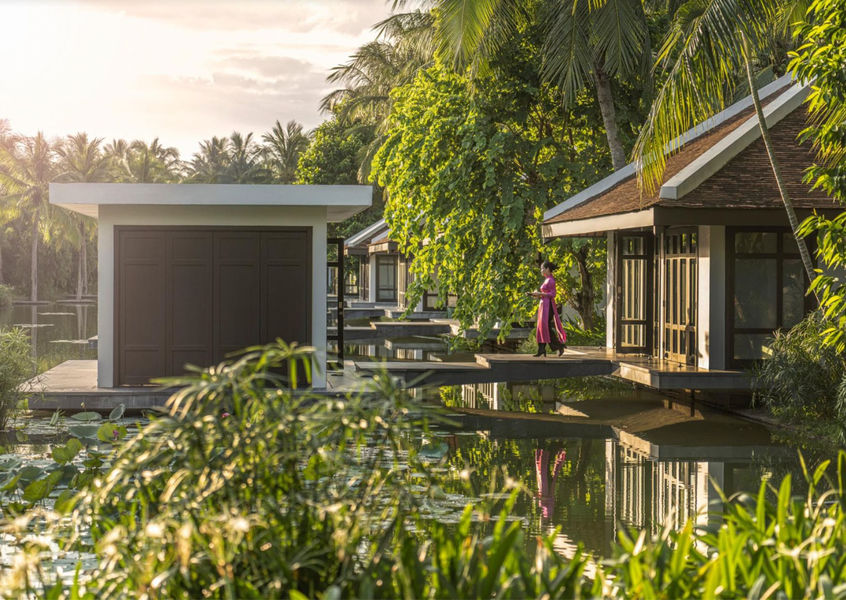
The Nam Hai espouses the concept of interbeing, drawn from Thich Nhat Hanh’s Vietnamese Zen tradition, the understanding that all things are interconnected and that presence is its own form of wellness. Daily yoga and meditation sessions, guided Vietnamese cooking classes, and cycling through the surrounding rice field villages are organized around this philosophy rather than as standalone amenities. 60 pool villas on Ha My Beach, 15 minutes from Hoi An’s ancient quarter. Rates from approximately USD 550 per night.
For Ha Long Bay: Several boutique cruise operators now offer structured meditation and tai chi programs on deck against the backdrop of the karst limestone bay — a setting that combines geological grandeur (the bay covers 1,553 km² and contains approximately 1,960 islets) with the particular stillness of being at sea in an enclosed natural space. The morning tai chi session on the deck of a private junk crossing Ha Long Bay is one of Vietnam’s distinctly unreproducible wellness experiences.
Recommended duration: 3–5 nights at a cultural wellness anchor property, with day excursions integrated.
The most effective luxury wellness retreat programs in Vietnam combine two or three retreat types within a single itinerary, creating a wellness arc that evolves as the guest moves through the country.
Tonkin Legends designs and operates luxury wellness itineraries across all seven retreat types described in this guide. As a reliable Vietnam B2B DMC operating under Viet Vision Holdings, we work exclusively with international tour operators and travel agencies, providing confirmed NET rates, on-the-ground wellness program coordination, and 24/7 local support throughout your clients’ stay.
Contact our team to discuss a customized wellness retreat program.
FAQs
What type of wellness retreat in Vietnam is best for first-time visitors?
A spa-inclusive retreat in Da Nang, particularly TIA Wellness Resort or Naman Retreat is the most accessible entry point. The structured daily program removes decision fatigue, the inclusive treatment model eliminates per-session pricing anxiety, and the Da Nang location combines easy international flight access with proximity to Hoi An for cultural grounding. First-time visitors benefit from a program framework before they have the experience to self-direct a more open-format retreat.
Which Vietnam wellness retreat is best for a complete digital detox?
Six Senses Ninh Van Bay and Amanoi are the two strongest choices. Both are accessible only by private boat or small aircraft transfer, creating a physical boundary between the retreat and the outside world. Six Senses Ninh Van Bay’s GEM (Guest Experience Maker) program means guests never need to make logistical decisions; Amanoi provides a deeper level of silence and sensory removal for guests who need the most complete form of disconnection.
Is Vietnam a good destination for a yoga retreat compared to Bali or Thailand?
Vietnam has closed the gap significantly since 2020. The Naman Retreat’s structured yoga program, TIA Wellness Resort’s daily practice schedule, and the availability of Indian yoga instructors at select properties make central Vietnam — particularly Da Nang and Hoi An — a credible yoga retreat destination. The primary differentiator is cultural depth: a yoga retreat in Hoi An sits within a UNESCO World Heritage context that Bali’s Ubud and Thailand’s Koh Samui cannot match for historical layering.
What is the best time of year to book a luxury wellness retreat in Vietnam?
This depends on the retreat type and location. Central Vietnam (Da Nang, Hoi An, Hue) is optimal from February to August. Southern Vietnam and the island properties (Ninh Van Bay, Con Dao, Phu Quoc) are best from November through April. Northern highland retreats (Sapa, Mai Chau) are excellent September through November and March through May. A multi-region wellness itinerary moving from north to south between March and May captures optimal conditions across all retreat types within a single trip.
Can luxury wellness retreats in Vietnam be incorporated into MICE and incentive travel programs?
Yes, and this is one of Vietnam’s strongest positioning advantages. Da Nang hosts the ARIYANA Convention Centre with capacity for 2,500 delegates. Conference participants can extend a 3-day MICE event into a 3–5 night wellness retreat at TIA Wellness Resort or Naman Retreat, both within 30 minutes of the venue. According to the American Express Global Business Travel Report 2024, between 40% and 45% of business travelers now extend corporate trips for leisure and a structured wellness extension positions Vietnam’s MICE offer significantly above standard beach leisure alternatives.

Comment (0)